
7/1/2026
Robots Don't Build Brands. People Do

How P&G is leading with human insight to build stronger brands.
It's never been more fun to be a brand builder.
That's how P&G Chief Brand Officer Marc Pritchard opened his keynote at Cannes Lions 2026. While AI is transforming the way marketers work, Marc's message was clear: the future of brand building will always begin with human insight.
From media fragmentation to commerce convergence and AI, the landscape is changing rapidly. But as Marc explained, one thing remains constant: great brands are built by uncovering human insights and transforming them into meaningful consumer experiences.
"Robots don't build brands. People do."
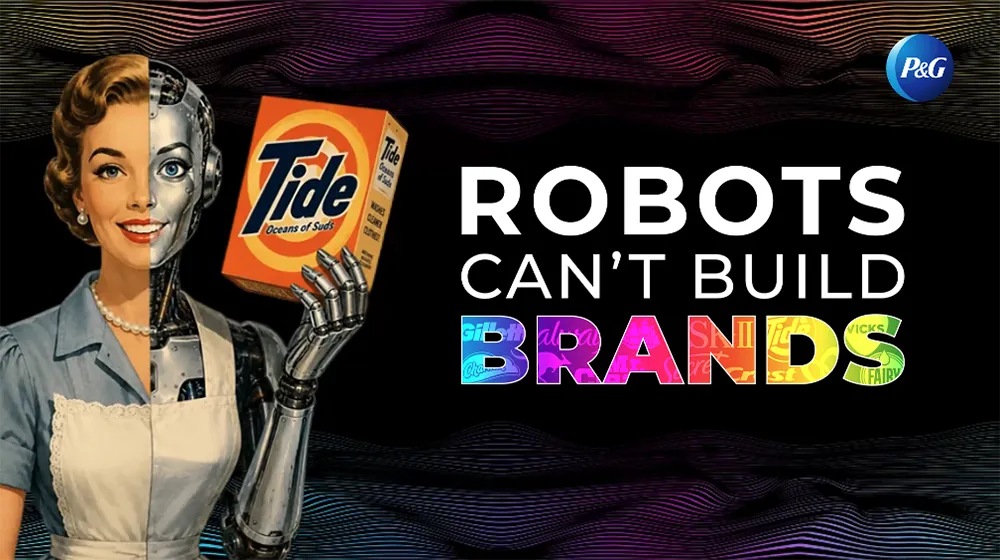
The Fundamentals Stay the Same
At the heart of P&G's next chapter is a renewed commitment to consumer-first brand building. Deep insights, meaningful storytelling, and superior products remain the foundation of lasting growth. No matter how advanced technology becomes, the core of brand building remains the same: discovering relevant human insights and transforming them into superior consumer experiences.
As Marc explained, what changes is how we work. What stays the same are the fundamentals of brand building. Brands still grow by building awareness, reinforcing memory and connecting consumers to purchase—but it all begins with understanding people.
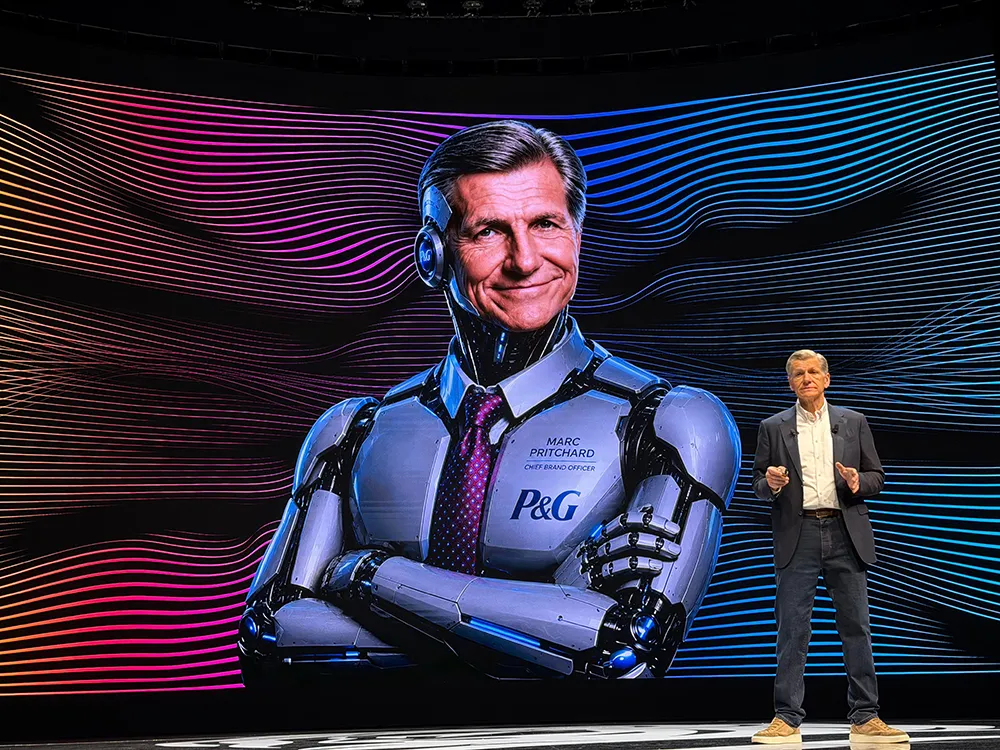
To bring that point to life during his keynote, Marc asked P&G's internal AI engine, ChatPG, to describe consumer behavior. While AI quickly generated a strong starting point, it couldn't uncover the nuanced cultural truths that come from observing people in their everyday lives. Those deeper insights — the ones rooted in human curiosity, empathy and real-world observation — are what transform information into ideas that build brands.
Take our UK dish care brand, Fairy, and its award-winning "Skip the Soak" campaign. While Dawn Powerwash's "clean as you go" proposition resonated in the U.S., our UK team uncovered a uniquely local insight: consumers have a deeply rooted ritual of soaking their dishes before washing them. AI could have analyzed millions of data points, but it couldn't understand that cultural behavior. By embracing that cultural truth, the team repositioned Fairy around helping people "skip the soak," driving double-digit growth.
Technology can analyze millions of data points. It takes people to transform those signals into ideas that build brands. It takes people to transform those signals into ideas that build brands.

How Work is Changing
While the fundamentals remain constant, how we bring ideas to life is evolving.
Brand building is moving away from slow, sequential "batch" processes toward a continuous flow of creativity — where ideas are developed, tested, optimized and scaled with greater speed, volume and variety than ever before. AI accelerates that process. Human creativity gives it meaning.
Pantene Europe demonstrates what's possible when the two work together.
The team began with a simple human observation: people protect their skin from UV exposure — why not their hair? They then combined AI with human creativity to explore consumer insights, develop concepts, land on the brand idea "Pantene Sunkiss Glow Spray for Strong Hair, Shinier than the Sun," create a package mock-up the same day and produce prototype advertising in a one-day shoot. The result: five times the assets, five times faster and at one-fifth the cost.
The technology didn't create the idea — it helped bring a human insight to life faster.
At the same time, SK-II demonstrated that sometimes the most powerful creative choice is knowing when not to rely on AI. By returning to the visible proof of PITERA™ on real skin and authentic human storytelling, the brand reconnected with consumers and returned to double-digit growth. As Marc noted, living proof doesn't need AI.

Human Creativity in Action
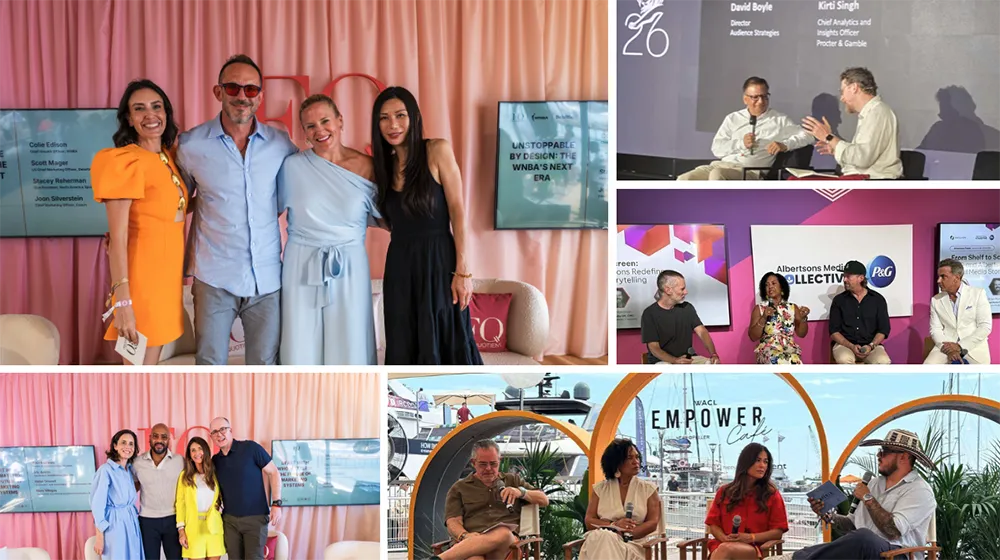
Across Cannes, P&G leaders demonstrated how these principles are being applied across every part of the business.
Kirti Singh reinforced that while AI is transforming how businesses analyze information and accelerate decisions, the fundamentals remain unchanged. He emphasized that technology is most powerful when paired with high-quality data, human insight, and a relentless focus on keeping the consumer at the center of every business decision.
At Empower Café, Lela Coffey premiered Rico's Tacos, showing how culturally authentic storytelling can strengthen retail media by creating deeper consumer connections and driving purchase intent.
Marc Villegas explored how P&G teams are using AI-powered creative tools to accelerate content development, optimize marketing systems and respond to culture in real time — enabling teams to spend less time on manual execution and more time building stronger creative ideas.
At The Female Quotient's FQ Beach, Eric Austin and Helen Driskell discussed how brands can embrace AI while preserving human collaboration and authentic communities that build trust and inspire action.
Damon Jones discussed how authentic community engagement strengthens trust, demonstrating that lasting brand growth comes from showing up with credibility, consistency and genuine partnerships — not simply participating in cultural moments.
Meanwhile, Stacey Reherman demonstrated how sports have evolved beyond sponsorships to become a strategic growth engine. By combining product superiority, social commerce and partnerships with leagues like the WNBA, P&G is turning fan passion into measurable business growth while helping sports ecosystems grow alongside its brands.
The Ultimate Metric: Retail Sales Growth
As media and commerce continue to converge, creativity can increasingly be measured by its ultimate outcome: business growth. When Mr. Clean launched its playful "retirement" campaign, success wasn't measured by likes or impressions — it was measured by an immediate double-digit increase in retail sales.
As Marc shared, the convergence of media and commerce is giving marketers something they've long wanted: a clearer view of what truly works. Rather than relying on proxy metrics alone, teams can directly connect creativity to commerce and see the impact on actual retail sales — allowing them to spend less time debating ROI and more time building brands.
People Build Brands
Today's brand builders have their hands on the keyboard — keeping human insight at the center of every decision while using AI to move faster.
The future of brand building isn't about choosing between people and AI. It's about combining the speed and scale of technology with the creativity, empathy and intuition that only people can bring.
Because as Marc reminded us:
"Robots don't build brands. People do."
READ MORE STORIES ON OUR BLOG

5/26/2026
Turning Real Life into Better Experiences
How P&G’s Analytics & Insights Masters are improving products, media, and everyday moments.
Read more

4/30/2026
Why ‘Consumer First’ Always Wins
A Conversation with P&G’s Chief Analytics & Insights Officer, Kirti Singh
Read more

3/19/2026
The Consumer is Always First and Always the Boss
Nothing matters more to us than putting the consumer first in everything we do – a principle that’s driven P&G for over 185 years.
Read more