
3/20/2026
Women in Water Spotlight: A Conversation on Innovation, Partnership, and Expanding Access to Clean Drinking Water

Access to clean drinking water is one of the most powerful ways to improve health, opportunity, and economic stability for families around the world.
For more than two decades, P&G has partnered with organizations like Save the Children to expand access to clean drinking water through the P&G Children’s Safe Drinking Water (CSDW) Program — helping deliver more than 25 billion liters of clean water to families in more than 100 countries.
In recognition of World Water Day and the role women play in advancing water solutions, we spoke with Claude Zukowski, Senior Director of Community Impact at P&G and leader of the P&G CSDW Program, and Janti Soeripto, President and CEO of Save the Children U.S.
In this conversation, they reflect on their personal journeys, what the 25-billion-liter milestone means for families and communities, and why strong partnerships — and women’s leadership — are essential to solving the global water crisis.

10-year-old Ladan collects water in Puntland, Somalia.
Courtesy of Save the Children.
A Shared Commitment to Improving Lives
Q: What inspired each of you to focus your careers on improving access to clean water?
Claude: Right after college, I started training to become an EMT and later became a firefighter paramedic. I always had a strong sense of wanting to give back and serve communities.
When I joined P&G, I began as a microbiologist focused on developing products that help keep people healthy. Over time, I learned more about the Children’s Safe Drinking Water Program. It was incredibly inspiring — using microbiological technology to reach children and families with clean water.
I joined the program first in a technical support role and eventually had the opportunity to lead it. It’s truly a privilege to work on something that directly improves the health and well-being of children and families around the world.
Janti: I actually started my career in the consumer goods sector. That experience was formative because these companies focus on solving everyday needs for everyday people.
But you also see where there are still gaps — especially when it comes to basic needs like clean water, hygiene, and shelter. After almost 20 years in that sector, I wanted to find ways to more directly increase access to those essentials.
As an economist, what frustrates me most is that we actually know how to solve many of these challenges. We have very cost-effective solutions in hand, and amazing partnerships like this one are helping bring them to more communities.
Still, two billion people still lack access to clean drinking water. Expanding access to clean water isn’t just the right thing to do; it’s also the smart thing to do.
Turning Innovation into Impact
Q: The P&G CSDW Program recently reached 25 billion liters of clean water delivered. What impact have you seen firsthand?
Claude: First, I want to acknowledge Save the Children. They’ve been part of the Children’s Safe Drinking Water Program since the early days, and reaching this milestone would never have been possible without partners like them.
One story that stands out to me is about a young woman named Grace in Kenya. The Children’s Safe Drinking Water Program first came to Grace’s community in 2011, when she was a little girl who could barely reach the top of the table where a P&G Purifier of Water demonstration was taking place.

As a young girl, Grace stirs a bucket of water as it is treated with a P&G Purifier of Water packet.
At the time, Grace and her sisters walked hours each day to reach the closest clean water source. They were often sick and frequently missed school. With better access to clean drinking water, Grace was able to stay in school and excel academically. She was eventually selected to attend a school outside of her village for talented students.
I had the opportunity to visit Grace a few years ago. She’s in high school and hopes to become a doctor one day.
Grace is just one story, but she represents thousands of children whose futures change when they have reliable access to clean water.

Grace walks with Claude and P&G CSDW Program founder Dr. Greg Allgood during a recent visit to her community in Kenya, reflecting on the lasting impact that access to clean drinking water has had on her future.
What 25 Billion Liters Really Means
Q: For many people, “25 billion liters” is hard to imagine. What does that milestone mean for communities?
Janti: Clean water is much more than just water. It affects communities — especially women and girls — on several levels.
First, there’s school attendance. If girls don’t have to walk miles every day to fetch water, they can go to school instead. It also reduces the risk of violence they face during those long journeys.
Second, it leads to economic opportunity. When girls finish school, they’re able to participate more fully in the workforce and support their communities. You saw that difference between Grace and her mom. One generation.
And third, there are health outcomes. Nearly a quarter of health clinics worldwide lack access to clean water. Around 70 million women give birth in those clinics.
I visited a clinic in Sierra Leone where Save the Children helped ensure access to clean water. There were zero maternal deaths and zero infant deaths during that period. Clean water isn’t the only factor, but it’s foundational for safe health care.
So when we talk about billions of liters of water, we’re really talking about healthier families, better education, and stronger economies.

Save the Children U.S. President and CEO Janti Soeripto visits Save the Children programs in Türkiye in April 2023 as the country recovered from devastating earthquakes a year prior.
Courtesy of Save the Children.
The Power of Partnership
Q: What makes the partnership between P&G and Save the Children so effective?
Janti: Successful partnerships start with a shared goal. Both organizations are deeply committed to solving this issue, but we also bring complementary strengths.
P&G brings innovation, product development, and consumer insight. Save the Children brings decades of experience working in some of the most challenging places in the world and delivering programs at scale.
Partnerships like this require long-term commitment. This collaboration has lasted more than 20 years. That kind of consistency — investment of time, talent, and leadership attention — is what allows real progress.
Claude: I agree. There is a shared mission and values. We work with partners who deeply understand the communities they serve.
P&G and Save the Children have worked together in places like the Philippines, Somalia, and South Sudan, because Save the Children has built trusted relationships and networks that allow programs like ours to reach the people who need them most. These programs wouldn't survive if it weren't for that commitment and expertise in those areas.
Another important part of partnership is raising awareness. The more people who understand the challenge and the solutions, the more we can bring others into the effort.
Women Driving Water Solutions
Q: Women play a major role in water access globally. How do you see their leadership shaping solutions?
Claude: In many communities, women already carry the responsibility for collecting water and caring for their families. When clean water solutions are introduced, they quickly become strong advocates, because they see the benefits firsthand.
Women often take leadership roles in water management committees, helping ensure long-term sustainability. These programs can also help shift perceptions about gender roles in communities.
Once women gain confidence and experience, we often see them become entrepreneurs and innovators within their communities. It’s inspiring to see how access to water can spark broader change.
Janti: You’re absolutely right. Globally, women bear roughly 70% of the responsibility for collecting water where access is limited. Girls under 15 are much more likely than boys to spend time fetching water instead of attending school. That means they also have the most to gain when access improves.
A Call to Do More
Q: What message would you share as we recognize World Water Day?
Janti: With World Water Day and International Women’s Day this month, it’s great to celebrate what this partnership has achieved over more than 20 years — especially for women and girls.
But it’s also a call to double down. There’s still a lot to do. We know these solutions work. How do we bring more partners along, so we can continue expanding this work and ultimately eradicate the problem? Because it is possible, and hopefully conversations like this inspire others to join the journey.
Claude: I second that. We’re committed to and grateful for the partnership.
Access to clean water is something many of us take for granted every day. Yet it’s one of the simplest ways to change the lives of children and families around the world. We hope more people will take the time to learn about the issue and join us in addressing it.
Learn more about the P&G Children’s Safe Drinking Water Program and Save the Children.
READ MORE STORIES ON OUR BLOG
10/2/2025
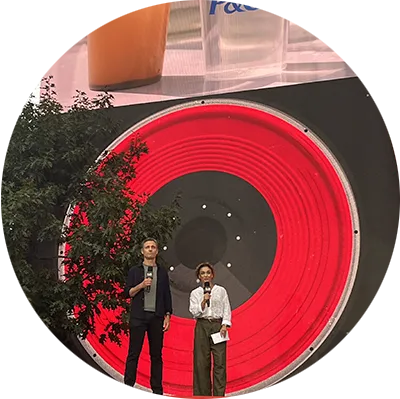
The Power of Clean Water: P&G Children’s Safe Drinking Water Program Reaches 25 Billion Liters
Learn how the P&G Children’s Safe Drinking Water Program, together with 150+ partners, has delivered 25 billion liters of clean water around the world.
Read more
4/26/2025
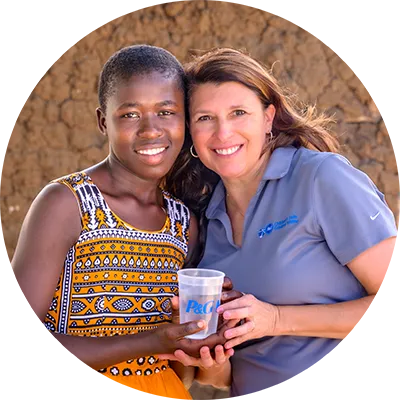
P&G's Women in Water: Building a Water Positive Future, Together
Meet some of the women at P&G leading the charge for a sustainable future, and discover how our culture of inclusion is driving innovation and impact.
Read more

2/27/2025
Clean Water, Transformed Lives: The P&G Children's Safe Drinking Water Program
Learn how P&G Children’s Safe Drinking Water Program has innovated and partnered to deliver life-changing clean water around the world.
Read more